
Salim and Anarkali
The love story of Salim and Anarkali is a story that every lover
knows. The Mughal prince Salim falling for a courtesan Anarkali is the stuff
that legends are made of. The relationship of Salim and Anarkali outraged the
Mughal emperor Akbar so much that both father and son decided to go on war.
***********_______________**********
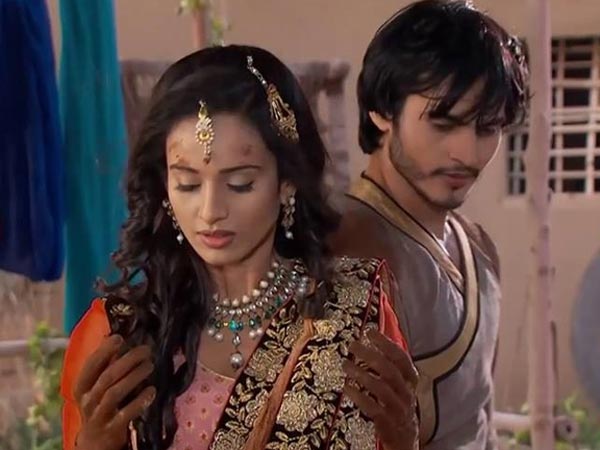
According to legend, Salim,
the son of the great Mughal emperor Akbar, fell in love with a beautiful
courtesan named Anarkali as a young prince. Anarkali, whose title means
"pomegranate blossom" (a title bestowed for her beauty) was famed for
her dancing skills as well as her great beauty. It is believed that her
original name was Nadira or Sharf-un-Nisa.He was mesmerized by her beauty and
fell in love as soon as he saw her. But Anarkali was a mere dancing girl, and
dancing girls were not of noble birth. They were considered to be low-born and
keeping any relation with them were looed dow and strictly prohibited by the
society. Anarkali knew that their romance was forbidden in the eyes of the
prince's father, Mughal Emperor Akbar. So she tried to keep away from Salim.
But how could she hold herself back from the prince's charms for long? Love
knows no rules, and soon Anarkali too was deeply in love with Salim.
But such an intense love
can't be concealed forever. The emperor could not digest the fact that his son
was in love with an ordinary courtesan. He started pressurizing Anarkali and
devised all sorts of tactics to make her fall in the eyes of the young, love
smitten prince. When Salim came to know of this, he declared a war against his
own father. But the mighty emperor's gigantic army proves too much for the
young prince to handle. He gets defeated and is sentenced to death.
This is when Anarkali
intervenes and renounces her love to save her beloved from the jaws of death.
She is entombed alive in a brick wall right in front of her lover's eyes. It
is, however, said that she did not die. The tomb was constructed on the opening
of a secret tunnel unknown to Salim. It is said she escaped through that tunnel
and fled the place, never to return again. The heartbroken Salim lives on to
become emperor Jahangir.
But he could never forget
his one true love Anarkali, in his lifetime. When he died, her name was on his
lips.
Thus ends the tragic love
story of Salim and Anarkali. Even today, these two lovers are remembered by
people and held in esteem by lovers all over; such exemplary their love was.
***********_______________**********
Images


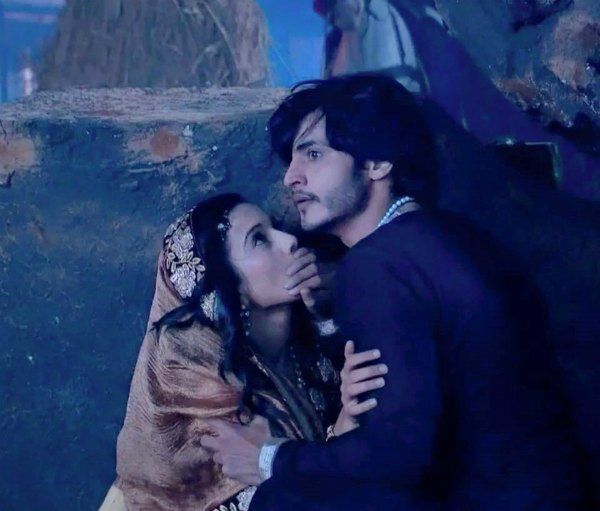


The Movie named ,
Anarkali (1966)
Director:
KunchakoStars:
Thikkurisi Sukumaran Nair, Prem Nazir
Cast: Prem Nazir as Prince SalimK. R. Vijaya as Anarkali / Nadira
Akbar Saleem Anarkali (1978)
Director:
Taraka Rama Rao NandamuriStars:
Taraka Rama Rao Nandamuri, Balakrishna, Deepa
Balakrishna (Saleem)
Deepa (Anarkali)
Romeo
and Juliet
In William Shakespeare's Romeo
and Juliet, a long feud
between the Montague and Capulet families disrupts the city of Verona and
causes tragic results for Romeo and Juliet.
Revenge, love, and a secret marriage force the young star-crossed lovers to
grow up quickly — and fate causes them to commit suicide in despair. Contrast
and conflict are running themes throughout Shakespeare's play, Romeo
and Juliet — one of the
Bard's most popular romantic tragedies.
***********_______________**********

Romeo and Juliet is set in Verona, Italy, where there
is an ongoing feud between the Montague and Capulet families. The play opens
with servants from both houses engaged in a street brawl that eventually draws
in the family patriarchs and the city officials, including Prince Escalus. The Prince ends the conflict by issuing a decree that prohibits any
further fighting at the risk of great punishment.
Meanwhile,
Romeo,
a young man from the Montague house, laments his unrequited love for a woman
named Rosaline, who has vowed to remain chaste for the rest of her life. Romeo
and his friend Benvolio happen to stumble across a Capulet servant, Peter,
who is trying to read a list of invitees to a masked party at the Capulet house
that evening. Romeo helps Peter read the list and decides to attend the party
because Rosaline will be there. He plans to wear a mask so that he will nobody
will recognize him as a Montague.
Romeo
arrives at the Capulets' party in costume. He falls in love with young Juliet
Capulet from the moment he sees her. However, Juliet's cousin Tybalt
recognizes Romeo and wants to kill him on the spot. Lord Capulet intervenes, insisting that Tybalt not disturb the party
because it will anger the Prince. Undeterred, Romeo quietly approaches Juliet
and confesses his love for her. After exchanging loving words, they kiss.
Afterwards,
Juliet's Nurse
tells Romeo that Juliet is a Capulet, which upsets the smitten youngster.
Meanwhile, Juliet is similarly distraught when she finds out that Romeo is a
Montague. Later that night, Romeo climbs the garden wall into Juliet's garden.
Juliet emerges on her balcony and speaks her private thoughts out loud. She
wishes Romeo could shed his name and marry her. Upon hearing her confession,
Romeo appears and tells Juliet that he loves her. She warns him to be true in
his love, and he swears by his own self that he will be. Before they part, they
agree that Juliet will send her Nurse to meet Romeo at nine o'clock the next
day, at which point he will set a place for them to be married.
The
Nurse carries out her duty, and tells Juliet to meet Romeo at the chapel where Friar Laurence lives and works. Juliet meets Romeo there, and the Friar
marries them in secret.
Benvolio
and Mercutio (another one of Romeo's friends) are waiting on the street
later that day when Tybalt arrives. Tybalt demands to know where Romeo is so
that he can challenge him to a duel, in order to punish him for sneaking into
the party. Mercutio is eloquently vague, but Romeo happens to arrive in the
middle of the verbal sparring. Tybalt challenges him, but Romeo passively
resists fighting, at which point Mercutio jumps in and draws his sword on
Tybalt. Romeo tries to block the two men, but Tybalt cuts Mercutio and runs
away, only to return after he hears that Mercutio has died. Angry over his
friend's death, Romeo fights with Tybalt and kills him. Then, he decides to
flee. When Prince Escalus arrives at the murder scene, he banishes Romeo from
Verona forever.
The
Nurse tells Juliet the sad news about what has happened to Tybalt and Romeo.
Juliet is heart-broken, but she realizes that Romeo would have been killed if
he had not fought Tybalt. She sends her Nurse to find Romeo and give him her
ring.
That
night, Romeo sneaks into Juliet's room, and they consummate their marriage. The
next morning, he is forced to leave when Juliet's mother arrives. Romeo travels
to Mantua, where he waits for someone to send news about Juliet or his
banishment.
During
Romeo and Juliet's only night together, however, Lord Capulet decides that
Juliet should marry a young man named Paris,
who has been asking for her hand. Lord and Lady Capulet tell Juliet of their plan, but she refuses, infuriating her
father. When both Lady Capulet and the Nurse refuse to intercede for the girl,
she insists that they leave her side.
Juliet
then visits Friar Laurence, and together they concoct a plan to reunite her
with Romeo. The Friar gives Juliet a potion that will make her seem dead for at
least two days, during which time Romeo will come to meet her in the Capulet
vault. The Friar promises to send word of the plan to Romeo.
Juliet
drinks the Friar's potion that night. The next morning, the day of Juliet and
Paris' wedding, her Nurse finds her "dead" in bed. The whole house
decries her suicide, and Friar Laurence insists they quickly place her into the
family vault.
Unfortunately,
Friar John has been unable to deliver the letter to Romeo informing him of the
plan, so when Romeo's servant brings him news in Mantua that Juliet has died,
Romeo is heart-broken. He hurries back to Verona, but first, buys poison from
an Apothecary and writes a suicide note detailing the tragic course of
events. As soon as Friar Laurence realizes that his letter never made it to
Romeo's hands, he rushes to the Capulet tomb, hoping to arrive before Romeo
does.
Romeo
arrives at the Capulet vault and finds it guarded by Paris, who is there to
mourn the loss of his betrothed. Paris challenges Romeo to a duel, and Romeo
kills him quickly. Romeo then carries Paris' body into the grave and sets it
down. Upon seeing Juliet's "dead" body lying in the tomb, Romeo
drinks the poison, gives her a last kiss - and dies.
Friar
Laurence arrives to the vault just as Juliet wakes up. He tries to convince her
to flee, but upon seeing Romeo's dead body, she takes her own life as well.
The
rest of the town starts to arrive at the tomb, including Lord Capulet and Lord Montague. Friar Laurence explains the whole story, and Romeo's
letter confirms it. The two families agree to settle their feud and form an
alliance despite the tragic circumstances.
***********_______________**********
Images


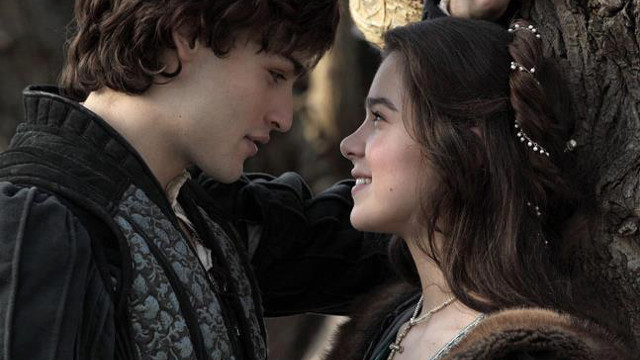


The Movie named ,
Romeo & Juliet (1954)
Director:
Renato CastellaniWriters:
William Shakespeare (play), Renato Castellani(adaptation)Stars:
Laurence Harvey, Susan Shentall, Flora Robson
Romeo & Juliet (2013)
Director:
Carlo CarleiWriters:
Julian Fellowes (screenplay), William Shakespeare (play)Stars:
Hailee Steinfeld, Douglas Booth, Damian LewisRomeo & Juliet (1996)
Director:
Baz LuhrmannWriters:
William Shakespeare (play), Craig Pearce (screenplay)| 1 more credit »Stars:
Leonardo DiCaprio, Claire Danes, John Leguizamo
Radha and Krishna
Perhaps no other faith glorifies the notion of love as Hinduism.
This is evident from the amazing variety of mythical love stories that
abounds Sanskrit literature, which is undoubtedly one of the richest treasure
hoards of exciting love tales.
Classical love legends from Hindu mythology and folklore of India
are both passionate and sensuous in content, and never fail to appeal to
the romantic in us. These fables stretches our imagination, engage
our emotions and, entertain us.
***********_______________**********

The Radha-Krishna amour is
a love legend of all times. It's indeed hard to miss the
many legends and paintings illustrating the Radha-Krishna affair is the most
memorable. Krishna's relationship with Radha, his favorite among the 'gopis'
(cow-herding maidens), has served as a model for male and female love in a
variety of art forms, and since the sixteenth century appears prominently as a
motif in North Indian paintings. The allegorical love of Radha has found
expression in some great Bengali poetical works of Govinda Das, Chaitanya
Mahaprabhu, and Jayadeva the author of Geet Govinda.
Krishna's youthful
dalliances with the 'gopis' are interpreted as symbolic of the loving interplay
between God and the human soul. Radha's utterly rapturous love for Krishna and
their relationship is often interpreted as the quest for union with the divine.
This kind of love is of the highest form of devotion in Vaishnavism, and is
symbolically represented as the bond between the wife and husband or beloved
and lover.
Radha, daughter of
Vrishabhanu, was Krishna's lover during that period of his life when he lived
among the cowherds of Vrindavan. Since childhood they were close to
each other - they played, they danced, they fought, they grew up together and
wanted to be together forever, but the world pulled them apart. He
departed to safeguard the virtues of truth, and she waited for him. He
vanquished his enemies, became the king, and came to be worshipped as a lord of
the universe. She waited for him. He married Rukmini and Satyabhama, raised a
family, fought the great war of Ayodhya, and she still waited. So great was
Radha's love for Krishna that even today her name is uttered whenever Krishna
is refered to, and Krishna worship is though to be incomplete without the
deification of Radha.
One day the two most talked
about lovers come together for a final single meeting. Suradasa in his
Radha-Krishna lyrics relates the various amorous delights of the union of Radha
and Krishna in this ceremonious 'Gandharva' form of their wedding in front of
five hundred and sixty million people of Vraj and all the gods and goddesses of
heaven. The sage Vyasa refers to this as the 'Rasa'. Age after age,
this evergreen love theme has engrossed poets, painters, musicians and all
Krishna devotees alike.
***********_______________**********
Images


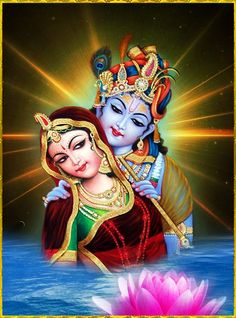


The Movie named ,
Radha Krishna (1978)
Director:
K. Raghavendra RaoWriters:
Yaddanapoodi Sulochana Rani (novel), Yaddanapoodi Sulochana Rani (story)Stars:
Shobhan Babu, Jaya Prada.
Queen Victoria & Prince Albert
Prince Albert married his first cousin, Queen Victoria of the United Kingdom, at the age of 20, and after his untimely death at age 42, the queen's memory of him guided her for the next 40 years.
***********_______________**********

As the first anniversary of the marriage of Prince William and Catherine Middleton, the Duke and Duchess of Cambridge, approaches later this week, we couldn’t help but reflect on the their love story and the fascination the world has for everything “royal”. So your Two Chums thought it would be fitting, (and fun) to get “caught up”, as it were, on the other love stories that have surrounded the British throne. Today we begin with one of the most famous and arguably the most culturally influential of all the monarchs of the British or any empire, Queen Victoria and the great love of her life, Prince Albert.
Known as the “grandmother of Europe”, Queen Victoria had nine children, all of whom married European royalty, thus spreading her family throughout the continent. She is the longest reigning monarch in Great Britain and the longest reigning female monarch in the world. It is because of this that we hear so much about her and her name is used in conjunction with so many things, for example, Victorian décor, Victorian ways of morality, Victorian dress, etc.
When Victoria was born in 1819, she was fifth in line to the throne which means that there were four people before her who would become the regnant after her uncle, King George IV, passed away. When her uncle did pass away, the four other people in line, including her father, had already passed away so Victoria became Queen. Victoria was just 18 years old when she took the throne in 1837. In her diary she wrote, “I was awoke at 6 o’clock by Mamma, who told me the Archbishop of Canterbury and Lord Conyngham were here and wished to see me. I got out of bed and went into my sitting-room (only in my dressing gown) and alone, and saw them. Lord Conyngham then acquainted me that my poor Uncle, the King, was no more, and had expired at 12 minutes past 2 this morning, and consequently that I amQueen.” Official documents prepared on the first day of her reign described her as Alexandrina Victoria, but the first name was withdrawn at her own wish and never used again. Quite an undertaking for an 18 year old girl.
Victoria was, as yet, unmarried but was aware of the various matrimonial plans that were being concocted by her mother. Victoria had met her cousin, Prince Albert of Saxe-Coburg and Gotha , before she became Queen. She knew that her mother was thinking that he might be a good suitor for her. According to her diary, she enjoyed Albert’s company from the beginning. After the visit she wrote, “[Albert] is extremely handsome; his hair is about the same colour as mine; his eyes are large and blue, and he has a beautiful nose and a very sweet mouth with fine teeth; but the charm of his countenance is his expression, which is most delightful.” To her Uncle Leopold who had introduced the pair, Victoria wrote to thank him “for the prospect of great happiness you have contributed to give me, in the person of dear Albert … He possesses every quality that could be desired to render me perfectly happy. He is so sensible, so kind, and so good, and so amiable too. He has besides the most pleasing and delightful exterior and appearance you can possibly see.” Clearly, Victoria was smitten!
On 10 February, 1840, Victoria and Albert were married. The day after their wedding, Victoria wrote in her diary, “I NEVER, NEVER spent such an evening!!! MY DEAREST DEAREST DEAR Albert … his excessive love & affection gave me feelings of heavenly love & happiness I never could have hoped to have felt before! He clasped me in his arms, & we kissed each other again & again! His beauty, his sweetness & gentleness – really how can I ever be thankful enough to have such a Husband! … to be called by names of tenderness, I have never yet heard used to me before – was bliss beyond belief! Oh! This was the happiest day of my life!”
This was the beginning of a wonderful love story. Victoria truly loved Albert and Albert truly loved Victoria. Albert was a level headed, smart man and was of great help to Victoria in her role as monarch. There are many memorials to Victoria and Albert in London, Royal Albert Hall, Victoria and Albert Museum, to name a couple. Victoria and Albert parented nine children and created a warm, loving household. A wonderful film that highlights their story is Young Victoria. Queen Victoria and Prince Albert were the first of the royals to occupy Buckingham Palace, the current home of Queen Elizabeth and Prince Phillip.
Growing up, Victoria was rather smothered by her mother. Her father had passed away when she was quite young and her mother felt it necessary to keep Victoria away from any harm. She was kept at home in Kensington Palace where they lived (and where Prince William and the Duchess of Cambridge are now living) and considered her upbringing “rather melancholy”. Her relationship, therefore, with her mother was not the sweetest. Prince Albert was instrumental in “sweetening” this mother/daughter relationship and when her mother passed away in 1861, Victoria was by her side. It was through reading some of her mother’s papers after her passing that Victoria realized that her mother loved her deeply and Victoria went into a bit of a depression because of this. Albert stepped up to the plate, even though he was suffering from a stomach disorder, and did a lot of Victoria’s duties at this time.
It was shortly after, they heard that the Prince of Wales, their eldest son, had slept with an actress, that Prince Albert went to Cambridge, where his son was studying, to confront him. This was not received well by the Prince of Wales. A few weeks later, Albert was diagnosed with typhoid fever and died. Victoria was devastated. She blamed her husband’s death on worry over the Prince of Wales’s philandering. He had been “killed by that dreadful business”, she said, and entered a state of mourning. Victoria wore black for the rest of her life and did not come out in public for many years.
The country went through rocky times as their Queen was not present, neither physically, nor emotionally. She did try to fulfill her duty as Queen but chose to do so from her residences, not appearing in public.
John Brown, or “Mr. Brown” as he has become known, was one of Victoria and Albert’s outdoor servants at Balmoral Castle, their Scottish retreat. After Albert’s death, Victoria made John Brown one of her personal servants and a close relationship ensued. This is depicted beautifully in the film “Mrs. Brown”,which is the name some of her public gave to Victoria. People have speculated on just how close their relationship was, but one does not know for sure. Without a doubt, John Brown brought the Queen out of her depressed state and more into life. She was very saddened by his death, having had a long and lasting closeness with him.
Though Victoria suffered much loss, she did a lot as Queen. She was a strong Queen, for the most part,and wanted to be involved in the goings on of the country.
She died at the age of 81 in Osbourne House, a grand Italian Renaissance palazzo on the Isle of Wight which her beloved Albert had designed and built.
Without a doubt, Victoria left us with an amazing legacy, and had an influence on our culture which is still recognized and felt today. Home and family have become synonymous with Victoria. She no doubt very much approved of those values we hold so dear….love, joy and abundant living.
***********_______________**********
Images


The Movie named ,
The Young Victoria (2009)